I bought a couple of frozen pheasants from a game supplier at my local farmers' market last month and have been having a hard time deciding how to cook them.
Because pheasant season is October-February, most of the recipes that came to mind were decidedly wintry, which just did not appeal at this glorious time of year when it's sunny out and the garden is full of the colourful produce of spring, not parsnips, cabbages and swede.
I took them out of the freezer with a plan to roast them and serve them with some sweet potatoes and spring greens, but as the day wore on and hours working in the garden had warmed me through completely, I knew that the only way these puppies were making it to our dinner table was via the barbecue.
I decided on a very simple Thai marinade and rather than cooking whole, I jointed the birds and gave them just a few minutes on each side, fully expecting to title this post "Pheasant Fail". I mean, whoever heard of barbecuing pheasant? Thai pheasant? No? I didn't think so.
What resulted was absolutely fantastic, juicy and bursting with flavour. At only £5 for both birds, this was one of the best experiments I have ever done and will definitely be repeated again soon.
You could absolutely do this with chicken, but I might use a little less sugar in the marinade, as it would be likely to burn because it would need a longer time on the grill. I don't see any reason why poussins, quail or other small game birds wouldn't work just as well. If you do use game bird, be sure to warn the other diners about the possibility of finding shot in their meat. Nothing spoils a summer barbie like an emergency trip to the dentist.
Thai Marinaded Barbecued Pheasant
serves 4, takes 40 minutes
2 medium pheasants
4 tbsp fish sauce (nam pla)
1 tbsp palm sugar
juice of 2 limes
large handful coriander (cilantro) chopped finely
1-2 large red chillies, finely chopped
Mix all the marinade ingredients together in a large freezer bag.
Remove the legs and separate into thighs and drumsticks just as you would with chicken, except the knee joint is a little fiddlier.
Remove the breasts and place the 12 pieces of meat into the freezer bag, seal and toss well to coat the meat well in the marinade.
Get the barbie going and when the coals are white, pieces on the grill for 2-3 minutes per side, depending on both the size of the meat and the heat from the coal. You want the outside to be slightly charred and the inside just cooked through. There is nothing drier or chewier than over-cooked pheasant, so take care not to overdo it.
I served ours with a simple salad of sweet corn, red pepper, coriander (cilantro), mint, lime, fish sauce, and a little garlic and I roasted the peeled chunks of sweet potato in the oven with just oil, salt and pepper for the about 40 minutes.
The combination of all these flavours and textures was just the perfect summer supper, with plenty of lip-tingling, finger-licking tang and spice. We ate outside with tall glasses of gin and tonic and extra lime wedges on the side.
MEGA YUM.
Showing posts with label British. Show all posts
Sunday, 6 June 2010
Friday, 4 June 2010
The Gardener's Treats.
I don't know if many amateur veggie growers would say that growing your own is less expensive than buying the same veggies in the grocery store. Maybe I'm doing it wrong, (probably) but the amount of money that we've spent on gardening tools, lumber to build raised beds, fencing, compost, seeds and young plants would probably take a few years to make back in commercial value.
That's not factoring in the amount of time and back-breaking effort involved in establishing a healthy veg patch, or the frustration when seedlings fail to thrive or are eaten by F*@&ing ba$t£rd caterpillars and pigeons.
These days, I think you'd struggle to find anyone growing veggies who doesn't do it purely for the love of the hobby and the pleasure of eating something that has traveled mere yards from the garden to the kitchen sink.
One of my favourite things about growing some of my own veggies is being able to eat parts of the plant that don't normally make it to the shops, like tiny, tender beetroot leaves or the side shoots of adolescent asparagus spears.
Just as we did last year, we're growing our potatoes in sacks on the patio, freeing up valuable veg patch for brassicas, corn, squash and so on. One of my favourite sneaky things to do at this time of year is feel around under the soil of some of the early cropping varieties to steal a few babies packed with sweet nuttiness and perfect for a summer salad.
The French Breakfast radishes have been popping up out of the soil for a couple of weeks now and those that do not get eaten on the spot have been making their way into all manner of salads, sandwiches and nibble plates.
I decided to roast the little potatoes in a little garlic confit oil and chill them to make a light and summery salad along with the peppery little radishes. We had ours with burgers, but it would be lovely by itself as a lunch or as part of a picnic or barbeque spread.
Roasted Miniature New Potato and Radish Salad
serves 4, takes approx 90 mins, including coking and cooling
500g (1 lb) tiny baby new potatoes, about the size of a 50p (half dollar)
500g (1 lb) French Breakfast radishes or other spicy variety, halved or quartered.
2 tbsp free range mayonnaise
2 tbsp plain yoghurt
1 clove garlic, crushed
2 stalks celery from the heart of the bunch, including the leaves, finely chopped
1 shallot, finely diced
2 tsp dijon mustard (Maille recommended)
2 tsp white wine vinegar
small handful parsely, finely chopped
2 tbsp garlic confit oil (*or olive oil plus 2 cloves of garlic in their skins)
Coarse sea salt
Black pepper to taste
Preheat your oven to 180C (350F)
Wash the little potatoes well, dry them thoroughly and toss them in the garlic oil*
Roast them for 30-40 minutes or until thoroughly cooked, with golden, wrinkly skins. Cool to room temp before refrigerating completely.
Whisk the mayonnaise and yoghurt together well with a the mustard, vinegar, garlic and a little sea salt.
Stir in the potatoes, radishes, celery, parsely and shallot and preferably refrigerate for half an hour or so before serving to allow the flavours to meld.
I had the leftovers for lunch the following day and it was every bit as lovely, but I wouldn't leave it for longer than that, because the radish and celery would likely go a little rubbery.
Stir
What is you favourite Springtime salad??
That's not factoring in the amount of time and back-breaking effort involved in establishing a healthy veg patch, or the frustration when seedlings fail to thrive or are eaten by F*@&ing ba$t£rd caterpillars and pigeons.
These days, I think you'd struggle to find anyone growing veggies who doesn't do it purely for the love of the hobby and the pleasure of eating something that has traveled mere yards from the garden to the kitchen sink.
One of my favourite things about growing some of my own veggies is being able to eat parts of the plant that don't normally make it to the shops, like tiny, tender beetroot leaves or the side shoots of adolescent asparagus spears.
Just as we did last year, we're growing our potatoes in sacks on the patio, freeing up valuable veg patch for brassicas, corn, squash and so on. One of my favourite sneaky things to do at this time of year is feel around under the soil of some of the early cropping varieties to steal a few babies packed with sweet nuttiness and perfect for a summer salad.
The French Breakfast radishes have been popping up out of the soil for a couple of weeks now and those that do not get eaten on the spot have been making their way into all manner of salads, sandwiches and nibble plates.
I decided to roast the little potatoes in a little garlic confit oil and chill them to make a light and summery salad along with the peppery little radishes. We had ours with burgers, but it would be lovely by itself as a lunch or as part of a picnic or barbeque spread.
Roasted Miniature New Potato and Radish Salad
serves 4, takes approx 90 mins, including coking and cooling
500g (1 lb) tiny baby new potatoes, about the size of a 50p (half dollar)
500g (1 lb) French Breakfast radishes or other spicy variety, halved or quartered.
2 tbsp free range mayonnaise
2 tbsp plain yoghurt
1 clove garlic, crushed
2 stalks celery from the heart of the bunch, including the leaves, finely chopped
1 shallot, finely diced
2 tsp dijon mustard (Maille recommended)
2 tsp white wine vinegar
small handful parsely, finely chopped
2 tbsp garlic confit oil (*or olive oil plus 2 cloves of garlic in their skins)
Coarse sea salt
Black pepper to taste
Preheat your oven to 180C (350F)
Wash the little potatoes well, dry them thoroughly and toss them in the garlic oil*
Roast them for 30-40 minutes or until thoroughly cooked, with golden, wrinkly skins. Cool to room temp before refrigerating completely.
Whisk the mayonnaise and yoghurt together well with a the mustard, vinegar, garlic and a little sea salt.
Stir in the potatoes, radishes, celery, parsely and shallot and preferably refrigerate for half an hour or so before serving to allow the flavours to meld.
I had the leftovers for lunch the following day and it was every bit as lovely, but I wouldn't leave it for longer than that, because the radish and celery would likely go a little rubbery.
Stir
What is you favourite Springtime salad??
Thursday, 27 May 2010
The Best Oven Fries EVER (seriously)
I'm going to make this quick, because I have a lot to do today, as I'm making a veritable Indian FEAST for a girlie sleep over tonight and I'm really excited.
I just wanted to share this method for what are seriously the best oven-fried chips you can make. Don't be fooled into thinking that they're a low-cal option, because they're not. I just don't like all the palaver involved with deep frying, cleaning up and filtering oil afterward.
This method produces a fry/chip with a crunchy, glass-like outer crust with the fluffiest, almost creamy interior. They take a little planning ahead, but you could do the par-boil the day before if you want to be able to bake them quickly before serving.
Sea-Salted Oven Fries To Die For
To serve 4 hungry people, takes approx 2 1/2 hours, including cooling
1 kilo (2.2lbs) floury potatoes, such as Maris Piper or King Edward
120ml (1/2 cup) goose fat or grape seed oil
plenty of sea salt.
Peel the potatoes, reserving the peels and cut them into 1/2" chips.
Boil the potatoes and the peels* in very salted water for 10-12 minutes until you almost think that they're cooked all the way. The outsides should be floury and loose, but obviously you don't want to cook them until they fall apart.
Drain the chips and when they're cool enough to handle, put the chips on a wire rack to cool and dry for an hour or so. Discard the cooked peels.
Heat your oven to 200C (400F) with a large baking tray containing the fat. When the oil is stonking hot, carefully tip in the chips and toss them in the oil to coat completely. They must be in one layer, so if your pan isn't big enough, use two pans on different shelves.
Put the chips in the oven and set your timer for 20 minutes, then check to see if they need to be turned (carefully) before finishing them for a further 15-20 minutes, or until really golden and crunchy on the outside.
Serve straight away with your favourite burger and plenty of lovely sea salt, then bathe in the the adulation from astonished, greedy family members.
*This is a tip I learned from Heston Blumenthal's In Search of Perfection series. Cooking the peels along with the chips imparts a really potato-y flavour to the finished product that will knock your socks off.
I was skeptical too, but believe me, it totally works.
I just wanted to share this method for what are seriously the best oven-fried chips you can make. Don't be fooled into thinking that they're a low-cal option, because they're not. I just don't like all the palaver involved with deep frying, cleaning up and filtering oil afterward.
This method produces a fry/chip with a crunchy, glass-like outer crust with the fluffiest, almost creamy interior. They take a little planning ahead, but you could do the par-boil the day before if you want to be able to bake them quickly before serving.
Sea-Salted Oven Fries To Die For
To serve 4 hungry people, takes approx 2 1/2 hours, including cooling
1 kilo (2.2lbs) floury potatoes, such as Maris Piper or King Edward
120ml (1/2 cup) goose fat or grape seed oil
plenty of sea salt.
Peel the potatoes, reserving the peels and cut them into 1/2" chips.
Boil the potatoes and the peels* in very salted water for 10-12 minutes until you almost think that they're cooked all the way. The outsides should be floury and loose, but obviously you don't want to cook them until they fall apart.
Drain the chips and when they're cool enough to handle, put the chips on a wire rack to cool and dry for an hour or so. Discard the cooked peels.
Heat your oven to 200C (400F) with a large baking tray containing the fat. When the oil is stonking hot, carefully tip in the chips and toss them in the oil to coat completely. They must be in one layer, so if your pan isn't big enough, use two pans on different shelves.
Put the chips in the oven and set your timer for 20 minutes, then check to see if they need to be turned (carefully) before finishing them for a further 15-20 minutes, or until really golden and crunchy on the outside.
Serve straight away with your favourite burger and plenty of lovely sea salt, then bathe in the the adulation from astonished, greedy family members.
*This is a tip I learned from Heston Blumenthal's In Search of Perfection series. Cooking the peels along with the chips imparts a really potato-y flavour to the finished product that will knock your socks off.
I was skeptical too, but believe me, it totally works.
Thursday, 22 April 2010
Offally Good Surf and Turf
Given that my husband is an annoyingly picky eater, it came as a bit of a surprise when we discovered that he really likes black pudding. The first time we went to Thomas Keller's Bouchon in Las Vegas was on the evening of our wedding (yes, we got married in Vegas) and Drew ordered the boudin noir with caramelized apples and pommes puree. I was convinced that he wouldn't like it, but he enjoyed it so much, he ordered it on two subsequent visits, which I think is an insane thing to do when you're presented with other such amazing dishes....
Black pudding isn't something we tend to buy very often, but whenever we come across a nice looking one at a farmers' market we'll snap it up. Last weekend, at the farmers' market in Newbury, Oxfordshire pork farmers Eadles had some beautiful stuff on display, including a lovely bit of black pudding that Drew quickly grabbed.
Often, I'll cook it as a part of a full English breakfast or similar but tonight I thought I'd something similar to his favourite dish with the caramelized apples and potatoes but with a few tweaks.
It seems that these days, whenever you see black pudding on a gastro-pub menu, it's been paired with scallops. Not that there's anything wrong with that, I mean they're a lovely pairing of tender and sweet with more dense and earthy but I wanted to try something a little different.
A prawn cake sounded like a nice idea to me, as well as a spring colcannon made with spinach instead of kale or cabbage. I used an eating apple (Cox) to garnish, as cooking apples disintegrate too easily. A Braeburn, Gala or Jazz would work very well.
It goes without saying that the quality of ingredients is hugely important. This is not the time for Tesco Value black pudding (but then, when IS the time for Tesco Value ?) And it's important not to use prawns which are already cooked. Save your prawn shells and freeze them for later use in stocks or sauces.
Black Pudding with Prawn Cakes,
Caramelized Apples and Spring Colcannon
Serves 2, takes 1 hour or a little more
300g (10.5oz) free range black pudding
1 tbsp olive oil
For the Prawn Cakes:
250g uncooked prawns, shelled and deveined
large handful rocket, (arugula) chopped
1/2 tsp ground coriander seed
pinch cayenne pepper
1/2 tsp sea salt
1 small clove garlic, crushed
1 tbsp plain flour
2 tbsp coarse, panko-style bread crumbs
1 egg white
For the Colcannon:
400g good mashing potatoes, such as Accent or Desiree
100g fresh spinach, washed
pinch, freshly grated nutmeg
2 tbsp butter
100 ml cream
50 ml milk (approx)
salt and pepper to taste
For the Apples:
1 nice eating apple, peeled peeled and cored, cut into 8ths
1 tbsp golden caster sugar
1 tbsp unsalted butter
Put all of the ingredients for the prawn cakes except for the breadcrumbs into a food processor and pulse a few times until just chopped and combined, but not a smooth paste, tip into a bowl and stir in the breadcrumbs.
Put a sheet of cling film on a baking tray, then smear the inside of a 5cm (2") ring mould or cookie cutter* with a little oil and set it on the cling film. Spoon 2 level tbsp of the prawn mixture into the mould and spread out evenly. Lift the mould and repeat 7 more times until you have 8 small, round patties on the sheet. Refrigerate these while you prepare the rest of the meal.
Peel the potatoes and boil in a pan of liberally salted water for 12-17 minutes, until tender to the tip of a knife, then drain completely and set aside until cooled a little then put them through a ricer.
While the potatoes are boiling, cook the black pudding and the apples.
Remove the casing from the black pudding and slice off eight pieces about half an inch thick.
Heat the olive oil in a large frying pan over a moderate heat and fry the black pudding for 2-3 minutes per side, until slightly crusty/crunchy around the edges and well browned. Move to a plate and keep warm in a low oven.
Meanwhile, heat a small frying pan over a medium heat and sprinkle the sugar into the pan. When the sugar begins to go golden brown, add the butter and stir well, then add the apple pieces. Cook the apple in the caramel for a few minutes before tossing to turn over and cook all over. When just tender, tip into a bowl and put in the warm oven with the black pudding.
Put a little butter in the large frying pan that you cooked the black pudding in and heat over a medium flame. When the butter and residual oil is nice and hot cook the prawn cakes for a couple of minutes until golden brown on one side, then turn over and finish on the second side.
While the prawn cakes are cooking, melt the 2 tbsp of butter over a medium heat with the salt and pepper and the nutmeg. Once the butter has melted, add the spinach and stir in well until soft and wilted, then add in the riced potatoes and stir in the cream. Stir the mixture well, adding enough of the milk to make a soft but not sloppy mixture. Test for seasoning, then serve the prawn cakes and black pudding with a spoonful of the colcannon and the caramelized apples.
*You don't NEED to use a mould, you can just form roughly round patties with teaspoons or your fingers dipped in cold water.
Black Pudding

Often, I'll cook it as a part of a full English breakfast or similar but tonight I thought I'd something similar to his favourite dish with the caramelized apples and potatoes but with a few tweaks.
It seems that these days, whenever you see black pudding on a gastro-pub menu, it's been paired with scallops. Not that there's anything wrong with that, I mean they're a lovely pairing of tender and sweet with more dense and earthy but I wanted to try something a little different.
A prawn cake sounded like a nice idea to me, as well as a spring colcannon made with spinach instead of kale or cabbage. I used an eating apple (Cox) to garnish, as cooking apples disintegrate too easily. A Braeburn, Gala or Jazz would work very well.
It goes without saying that the quality of ingredients is hugely important. This is not the time for Tesco Value black pudding (but then, when IS the time for Tesco Value ?) And it's important not to use prawns which are already cooked. Save your prawn shells and freeze them for later use in stocks or sauces.
Black Pudding with Prawn Cakes,
Serves 2, takes 1 hour or a little more
300g (10.5oz) free range black pudding
1 tbsp olive oil
For the Prawn Cakes:
250g uncooked prawns, shelled and deveined
large handful rocket, (arugula) chopped
1/2 tsp ground coriander seed
pinch cayenne pepper
1/2 tsp sea salt
1 small clove garlic, crushed
1 tbsp plain flour
2 tbsp coarse, panko-style bread crumbs
1 egg white
For the Colcannon:
400g good mashing potatoes, such as Accent or Desiree
100g fresh spinach, washed
pinch, freshly grated nutmeg
2 tbsp butter
100 ml cream
50 ml milk (approx)
salt and pepper to taste
For the Apples:
1 nice eating apple, peeled peeled and cored, cut into 8ths
1 tbsp golden caster sugar
1 tbsp unsalted butter
Put all of the ingredients for the prawn cakes except for the breadcrumbs into a food processor and pulse a few times until just chopped and combined, but not a smooth paste, tip into a bowl and stir in the breadcrumbs.
Put a sheet of cling film on a baking tray, then smear the inside of a 5cm (2") ring mould or cookie cutter* with a little oil and set it on the cling film. Spoon 2 level tbsp of the prawn mixture into the mould and spread out evenly. Lift the mould and repeat 7 more times until you have 8 small, round patties on the sheet. Refrigerate these while you prepare the rest of the meal.
Peel the potatoes and boil in a pan of liberally salted water for 12-17 minutes, until tender to the tip of a knife, then drain completely and set aside until cooled a little then put them through a ricer.
While the potatoes are boiling, cook the black pudding and the apples.
Remove the casing from the black pudding and slice off eight pieces about half an inch thick.
Heat the olive oil in a large frying pan over a moderate heat and fry the black pudding for 2-3 minutes per side, until slightly crusty/crunchy around the edges and well browned. Move to a plate and keep warm in a low oven.
Meanwhile, heat a small frying pan over a medium heat and sprinkle the sugar into the pan. When the sugar begins to go golden brown, add the butter and stir well, then add the apple pieces. Cook the apple in the caramel for a few minutes before tossing to turn over and cook all over. When just tender, tip into a bowl and put in the warm oven with the black pudding.
Put a little butter in the large frying pan that you cooked the black pudding in and heat over a medium flame. When the butter and residual oil is nice and hot cook the prawn cakes for a couple of minutes until golden brown on one side, then turn over and finish on the second side.
While the prawn cakes are cooking, melt the 2 tbsp of butter over a medium heat with the salt and pepper and the nutmeg. Once the butter has melted, add the spinach and stir in well until soft and wilted, then add in the riced potatoes and stir in the cream. Stir the mixture well, adding enough of the milk to make a soft but not sloppy mixture. Test for seasoning, then serve the prawn cakes and black pudding with a spoonful of the colcannon and the caramelized apples.
*You don't NEED to use a mould, you can just form roughly round patties with teaspoons or your fingers dipped in cold water.
Labels:
Apples,
Black Pudding,
British,
Potatoes,
prawns
Wednesday, 21 April 2010
Rosy Stems of Tart Perfection
I know I should be patient and wait for our rhubarb to be ready to pick, but we've got a good couple of weeks before we can touch it and we couldn't pick so much as one stem last year, as the plants were still babies. Drew has been very patient and Hampshire rhubarb is on sale at Waitrose right now for something like £1.30 a bunch, so I snapped some up. I had the idea to do a jelly instead of a crumble or pie and I wanted to make a stem ginger ice cream to serve with it. It turns out, my idea was a good one and what we had was a zingy, refreshing dessert that was just right for this time of year.
I went charity shop hopping yesterday and found a couple of pretty, old jelly moulds for a few quid, so I was very excited about that. I made the rhubarb compote first and refrigerated it for use in a couple of ways, including as an accompaniment to some creme brulees I made the other day, but you could make it right before making the jelly and it would work just as well, it would just take a little longer to set. You will not need all of the compote you make, but you can always keep it in the fridge or freeze it for future use.
This is a great dinner party dish because besides plating, it can all be done the day before, but it's very pretty and has lovely layers of flavour.
Rhubarb Jelly and Stem Ginger Ice Cream
Serves 8, takes approx 45 minutes plus chilling time
For the jelly:
500g (1 lb) stalks rhubarb, cut into 1" chunks
8 tbsp golden caster sugar
2 tbsp water
2 sachets powdered gelatine
100ml white wine
300ml boiling water
100ml rhubarb cordial (optional)
2- 500ml (1 pint) jelly moulds or 8 individual ones*

In a non-stick or stainless steel saucepan, sprinkle the rhubarb chunks with half of the sugar and the 2 tbsp of water. Stir gently and heat gradually over a low-medium heat. Cover the pan and let the rhubarb cook gently and undisturbed for about 5 minutes, checking with the back of a knife to check that the rhubarb is done. You want it to be very tender but not mushy. Turn off the heat and leave uncovered until you're ready to use it.
Tip the gelatine and remaining sugar into a heat-proof measuring jug and pour over the 300 ml of the boiling water and stir well to dissolve. If the gelatine isn't dissolving completely, pop the just into a small pan of barely simmering water and stir for a few minutes until completely clear.
Add the rhubarb cordial (if using. If not, add 100ml more water) and the white wine and stir into 500ml of the rhubarb compote in a bowl. Taste the mixture for sweetness, adding more sugar if necessary, but be careful not to make it too sweet.
Spoon the mixture into the jelly moulds and refrigerate until set firm. Depending on whether you started out with warm or cold compote, this could take up to 5 hours.
To serve the jelly, dip the moulds in a bowl full of boiling water for a few seconds before turning out onto a plate. It should be firm enough that when you cut a wedge, it should just about stand up.
For the ice cream:
2 large, free-range eggs
1 free range egg yolk
400ml double cream (heavy whipping cream)
200 ml whole milk
3/4 cup golden caster sugar
syrup from a jar of stem ginger
3 large knobs of stem ginger, one finely grated, two diced about 4mm(3/16")
Beat the eggs, egg yolk and sugar together well, until very pale and fluffy.
Drizzle in the ginger syrup while the machine is still running, then the cream and milk on a lower speed.
Pour the mixture into the canister of your ice cream machine and churn until 99% set (about half an hour, follow the manufacturer's instructions)
When the mixture is almost there, add in the grated ginger and churn for a further minute or two, then add the chopped ginger and give it one more minute.
Scrape into a clean, airtight container and allow to finish setting in the freezer for an hour or so.
Turn the jelly out onto a plate and cut carefully with a knife dipped in hot water.
Scoop (or if you're fancy, make a quenelle) your ice cream onto small plates and garnish with extra long langue du chat cookies or vanilla tuille cookies.

And I will sit and eat mine while I'm waiting for my lovely red veggie to grow....
Any day now, any day.
*If you you don't have jelly moulds, you could just as easily make the jelly in pretty glasses and put the scoop of ice cream on top.
Rhubarb Jelly
This is a great dinner party dish because besides plating, it can all be done the day before, but it's very pretty and has lovely layers of flavour.
Rhubarb Jelly and Stem Ginger Ice Cream
Serves 8, takes approx 45 minutes plus chilling time
For the jelly:
500g (1 lb) stalks rhubarb, cut into 1" chunks
8 tbsp golden caster sugar
2 tbsp water
2 sachets powdered gelatine
100ml white wine
300ml boiling water
100ml rhubarb cordial (optional)
2- 500ml (1 pint) jelly moulds or 8 individual ones*
In a non-stick or stainless steel saucepan, sprinkle the rhubarb chunks with half of the sugar and the 2 tbsp of water. Stir gently and heat gradually over a low-medium heat. Cover the pan and let the rhubarb cook gently and undisturbed for about 5 minutes, checking with the back of a knife to check that the rhubarb is done. You want it to be very tender but not mushy. Turn off the heat and leave uncovered until you're ready to use it.
Tip the gelatine and remaining sugar into a heat-proof measuring jug and pour over the 300 ml of the boiling water and stir well to dissolve. If the gelatine isn't dissolving completely, pop the just into a small pan of barely simmering water and stir for a few minutes until completely clear.
Add the rhubarb cordial (if using. If not, add 100ml more water) and the white wine and stir into 500ml of the rhubarb compote in a bowl. Taste the mixture for sweetness, adding more sugar if necessary, but be careful not to make it too sweet.
Spoon the mixture into the jelly moulds and refrigerate until set firm. Depending on whether you started out with warm or cold compote, this could take up to 5 hours.
To serve the jelly, dip the moulds in a bowl full of boiling water for a few seconds before turning out onto a plate. It should be firm enough that when you cut a wedge, it should just about stand up.
2 large, free-range eggs
1 free range egg yolk
400ml double cream (heavy whipping cream)
200 ml whole milk
3/4 cup golden caster sugar
syrup from a jar of stem ginger
3 large knobs of stem ginger, one finely grated, two diced about 4mm(3/16")
Beat the eggs, egg yolk and sugar together well, until very pale and fluffy.
Drizzle in the ginger syrup while the machine is still running, then the cream and milk on a lower speed.
Pour the mixture into the canister of your ice cream machine and churn until 99% set (about half an hour, follow the manufacturer's instructions)
When the mixture is almost there, add in the grated ginger and churn for a further minute or two, then add the chopped ginger and give it one more minute.
Scrape into a clean, airtight container and allow to finish setting in the freezer for an hour or so.
Turn the jelly out onto a plate and cut carefully with a knife dipped in hot water.
Scoop (or if you're fancy, make a quenelle) your ice cream onto small plates and garnish with extra long langue du chat cookies or vanilla tuille cookies.
And I will sit and eat mine while I'm waiting for my lovely red veggie to grow....
Any day now, any day.
*If you you don't have jelly moulds, you could just as easily make the jelly in pretty glasses and put the scoop of ice cream on top.
Monday, 22 March 2010
The Perfect Roast Potato
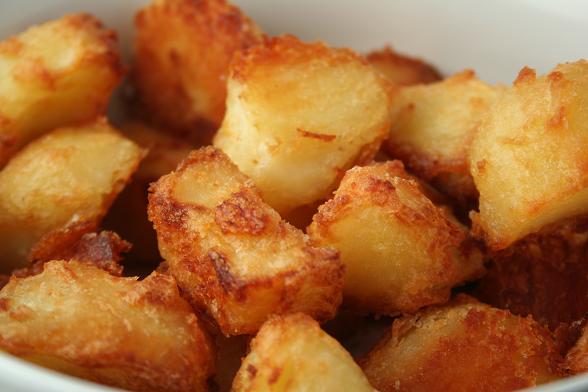
The perfect roast potato is a thing of wondrous beauty. There are very few pieces of meat that don't benefit from having these crunchy, fluffy pieces of gold as an accompaniment. In the UK, you can buy bags of frozen roast potatoes in grocery stores, which I believe is truly a crime. Not only because it's such a lazy way to make them, but because the result is so AWFUL.
A proper roast potato is not hard to make, as long as you follow a few rules, and the end result will seriously send shivers down your spine.
Golden yellow, with crunchy, brittle edges the colour of deep amber, which give way to an impossibly light and fluffy interior that disappears like cream in your mouth. NO WAY can you achieve that in twenty minutes from a bag of frozen, congealed lumps. For the same reason, make plenty, but don't make more than you plan to eat the evening of cooking, as they just don't reheat well.
I have spent the better part of twenty years making roast potatoes, stealing tips from here and there. For the past couple, I have been able to turn out platters of crunchy, golden potatoes and this is how.
The goose fat is important. So important that when I went back to the States for the last Thanksgiving, I smuggled a jar in, disguised as a pot of Karma Kream from Lush.
If you can't get goose fat, use duck, which comes in a close second. If you can't get duck fat, use grapeseed oil, as it has a high smoke point.
You need to use a floury potato, In the UK, Maris Piper, Desiree or King Edward work brilliantly, while in the States, a russett is a good choice, it just depends on the time of year and the region you live in. If you boil the potato and it begins to fall apart in a granular, floury way around the outside, then it's probably a safe bet.
So those are the two most important things. The recipe I have below is the method I follow every single time, which has yet to fail me. The addition of a few sprigs of rosemary or halved (skin on) cloves of garlic is lovely when serving with lamb or pork but here is the basic method:
Best Ever Roast Potatoes
To serve 6. Takes approximately 1 hour
1kg (2.2lbs) floury potatoes, peeled and cut into halves (or quarters if very big)
4 tbsp goose fat
1 tbsp sea salt
Heat your oven to 220C (450F)
Bring the potatoes to a boil in a large pan of salted water. Boil for around 10 minutes, keeping an eye on them. The point at which you drain them is important. You want them to be almost cooked, with tender, floury outsides. Drain in a colander and allow them to steam themselves almost dry.
Meanwhile-
You'll need a roasting tin large enough to hold the potatoes in one layer, with room around each.
put the goose fat in the tin and put on the top shelf of your oven for 5-7 minutes and the fat is stonkingly hot and almost smoking.
CAREFULLY, tip the drained potatoes into the hot fat. You need to turn them in the fat well enough to coat completely, but taking care not to break the potatoes up or splash yourself with hot fat.
Make sure the potatoes are spread out evenly and put them in the oven to roast for 40-50 minutes, removing from the oven halfway through to turn, ensuring even cooking.
Obviously, you can burn them if you leave them in for toooo long, but it's far better to have a dark amber around the edges than to bring them out too early and have a soggy, pale potato.
They're wonderful served with roast beef and Yorkshire pud, but go equally well with just about any other meat dish including pies.
Perfect Roast Potatoes

A proper roast potato is not hard to make, as long as you follow a few rules, and the end result will seriously send shivers down your spine.

Golden yellow, with crunchy, brittle edges the colour of deep amber, which give way to an impossibly light and fluffy interior that disappears like cream in your mouth. NO WAY can you achieve that in twenty minutes from a bag of frozen, congealed lumps. For the same reason, make plenty, but don't make more than you plan to eat the evening of cooking, as they just don't reheat well.
I have spent the better part of twenty years making roast potatoes, stealing tips from here and there. For the past couple, I have been able to turn out platters of crunchy, golden potatoes and this is how.
The goose fat is important. So important that when I went back to the States for the last Thanksgiving, I smuggled a jar in, disguised as a pot of Karma Kream from Lush.
If you can't get goose fat, use duck, which comes in a close second. If you can't get duck fat, use grapeseed oil, as it has a high smoke point.
You need to use a floury potato, In the UK, Maris Piper, Desiree or King Edward work brilliantly, while in the States, a russett is a good choice, it just depends on the time of year and the region you live in. If you boil the potato and it begins to fall apart in a granular, floury way around the outside, then it's probably a safe bet.
So those are the two most important things. The recipe I have below is the method I follow every single time, which has yet to fail me. The addition of a few sprigs of rosemary or halved (skin on) cloves of garlic is lovely when serving with lamb or pork but here is the basic method:
Best Ever Roast Potatoes
To serve 6. Takes approximately 1 hour
1kg (2.2lbs) floury potatoes, peeled and cut into halves (or quarters if very big)
4 tbsp goose fat
1 tbsp sea salt
Heat your oven to 220C (450F)
Bring the potatoes to a boil in a large pan of salted water. Boil for around 10 minutes, keeping an eye on them. The point at which you drain them is important. You want them to be almost cooked, with tender, floury outsides. Drain in a colander and allow them to steam themselves almost dry.
Meanwhile-
You'll need a roasting tin large enough to hold the potatoes in one layer, with room around each.
put the goose fat in the tin and put on the top shelf of your oven for 5-7 minutes and the fat is stonkingly hot and almost smoking.
CAREFULLY, tip the drained potatoes into the hot fat. You need to turn them in the fat well enough to coat completely, but taking care not to break the potatoes up or splash yourself with hot fat.
Make sure the potatoes are spread out evenly and put them in the oven to roast for 40-50 minutes, removing from the oven halfway through to turn, ensuring even cooking.
Obviously, you can burn them if you leave them in for toooo long, but it's far better to have a dark amber around the edges than to bring them out too early and have a soggy, pale potato.
They're wonderful served with roast beef and Yorkshire pud, but go equally well with just about any other meat dish including pies.
Thursday, 18 March 2010
By Request. A Piece of British History.
Yesterday, a friend of a chef-friend of mine asked me for my shepherds pie recipe.
Like most traditional recipes, every family's is slightly different and generally made from a recipe passed down through the generations from Gran to Mum to the kids.
Britain has long had a reputation for bad food, which is such a shame, because beautiful dishes like this are such a wonderful part of our culinary heritage, making the most of the ingredients available in our small isles. Helen Graves (Freaking AMAZING foodie blogger) did a brilliant Top 100 of uniquely British foods, which should put paid to all those nasty (and untrue!) rumours.
I don't have any pictures because I haven't made it since I began my blog and while I have taken many pictures of past recipe triumphs, my shepherds' pie never got its close-up.
It's not that this isn't a fantastic recipe, it's just that I've been making and it for so long now it's just a part of my repertoire and never got a thought from the camera phone.
One thing that shepherds pie DOES require is lamb. Often you'll see a beefy version, labeled as shepherd's pie but that is really cottage pie. Come on people, the clue is in the name......
I usually make this with lamb shoulder, as I came across this by accident a few years ago, when I'd bought a whole shoulder on sale and used half for a curry. I chopped the rest up really small for this pie and it was easily the best result I've had before or since. You can use left over roast lamb, minced lamb, mutton or hogget if you come across some in the market. Just don't use beef and call it a shepherds pie. Please.
My Best Ever Shepherds Pie.
Serves 6, Takes 1 1/2 hours.
1kg (2.2lbs) lamb shoulder, cut off the bone and chopped coarsley into smallish pieces. (Usually, lamb displayed as 'stewing lamb' is shoulder. Ask your butcher)
6 large floury potatoes
3 large onions, diced
2 large carrots, diced 1cm cubes
2 cloves garlic
500ml free-range chicken stock
large glass red wine
3 bay leaves
2 sprigs rosemary, needles removed and chopped
1 large sprig thyme, leaves picked
2 tbsp Worcestershire sauce
3 tbsp olive oil
3 tbsp butter
300ml whole milk
salt & pepper
a little finely grated cheese* such as parmesan, mature cheddar, red Leicester etc..
In a large, deep-sided frying pan or casserole, heat the olive oil over a fairly high heat. When nice and hot, tip in all your meat and stir it well through the olive oil. Stir and fry, stir and fry for several minutes, pausing long enough between stirs to let the meat get some good colour on it and then use a slotted spoon remove it all from the pan.
Tip the onions into the pan and cook in the lovely lamby fat for 5-6 minutes, until softening and going brown. Add the carrots and herbs to the pan and cook for a minute before adding the meat back to the pan with the stock, the wine, Worcestershire sauce, garlic, the bay leaves, some salt, plenty of black pepper. Bring to a simmer, then turn down the heat to low and cover, leaving to cook for 40 minutes, until the meat is meltingly tender, the onions have all but dissolved and there is little to no liquid left int he pan. You can cook it for longer if you like-up to three hours, just watch the liquid levels.
While the lamb is cooking, do the potatoes:
Peel the potatoes and cut into large, even-sized chunks. Bring to a boil in a large saucepan of salted water and continue to boil for a further 10-12 minutes until tender to the tip of a sharp knife, drain. Let them steam dry for a few minutes before using a potato ricer to make a lovely fluffy pile of dry mash.
In the saucepan you used to cook the potatoes, melt the butter with the milk, some salt and the white pepper. When nice and hot, tip in the riced potato and stir well, adding a little milk if the mixture is too thick. Taste test for seasoning and adjust if necessary.
Turn on the oven to 190C 375F.
In a deep baking dish, tip your lamb mixture in to fill to about 2/3 of the way up. Spoon the mashed potatoes on top of the mince and spread into an even layer. Us a fork to make rough peaks in the mash, almost like meringue. Sprinkle with a little grated cheese and pop in the oven, baking for about 30 minutes, until you have a nice golden brown crust with some crunchy brown bits.
Remove from the oven and allow to cool for about ten minutes before serving. I usually (always) serve an additional vegetable along with this dish. Steamed peas, green beans, broccoli, roasted beets etc are all lovely, depending on the season.
Having written down the recipe, I totally fancy this now. I'll put it on next week's menu and will add the pics then.
Shepherds Pie
Like most traditional recipes, every family's is slightly different and generally made from a recipe passed down through the generations from Gran to Mum to the kids.
Britain has long had a reputation for bad food, which is such a shame, because beautiful dishes like this are such a wonderful part of our culinary heritage, making the most of the ingredients available in our small isles. Helen Graves (Freaking AMAZING foodie blogger) did a brilliant Top 100 of uniquely British foods, which should put paid to all those nasty (and untrue!) rumours.
I don't have any pictures because I haven't made it since I began my blog and while I have taken many pictures of past recipe triumphs, my shepherds' pie never got its close-up.
It's not that this isn't a fantastic recipe, it's just that I've been making and it for so long now it's just a part of my repertoire and never got a thought from the camera phone.
One thing that shepherds pie DOES require is lamb. Often you'll see a beefy version, labeled as shepherd's pie but that is really cottage pie. Come on people, the clue is in the name......
I usually make this with lamb shoulder, as I came across this by accident a few years ago, when I'd bought a whole shoulder on sale and used half for a curry. I chopped the rest up really small for this pie and it was easily the best result I've had before or since. You can use left over roast lamb, minced lamb, mutton or hogget if you come across some in the market. Just don't use beef and call it a shepherds pie. Please.
My Best Ever Shepherds Pie.
Serves 6, Takes 1 1/2 hours.
1kg (2.2lbs) lamb shoulder, cut off the bone and chopped coarsley into smallish pieces. (Usually, lamb displayed as 'stewing lamb' is shoulder. Ask your butcher)
6 large floury potatoes
3 large onions, diced
2 large carrots, diced 1cm cubes
2 cloves garlic
500ml free-range chicken stock
large glass red wine
3 bay leaves
2 sprigs rosemary, needles removed and chopped
1 large sprig thyme, leaves picked
2 tbsp Worcestershire sauce
3 tbsp olive oil
3 tbsp butter
300ml whole milk
salt & pepper
a little finely grated cheese* such as parmesan, mature cheddar, red Leicester etc..
In a large, deep-sided frying pan or casserole, heat the olive oil over a fairly high heat. When nice and hot, tip in all your meat and stir it well through the olive oil. Stir and fry, stir and fry for several minutes, pausing long enough between stirs to let the meat get some good colour on it and then use a slotted spoon remove it all from the pan.
Tip the onions into the pan and cook in the lovely lamby fat for 5-6 minutes, until softening and going brown. Add the carrots and herbs to the pan and cook for a minute before adding the meat back to the pan with the stock, the wine, Worcestershire sauce, garlic, the bay leaves, some salt, plenty of black pepper. Bring to a simmer, then turn down the heat to low and cover, leaving to cook for 40 minutes, until the meat is meltingly tender, the onions have all but dissolved and there is little to no liquid left int he pan. You can cook it for longer if you like-up to three hours, just watch the liquid levels.
While the lamb is cooking, do the potatoes:
Peel the potatoes and cut into large, even-sized chunks. Bring to a boil in a large saucepan of salted water and continue to boil for a further 10-12 minutes until tender to the tip of a sharp knife, drain. Let them steam dry for a few minutes before using a potato ricer to make a lovely fluffy pile of dry mash.
In the saucepan you used to cook the potatoes, melt the butter with the milk, some salt and the white pepper. When nice and hot, tip in the riced potato and stir well, adding a little milk if the mixture is too thick. Taste test for seasoning and adjust if necessary.
Turn on the oven to 190C 375F.
In a deep baking dish, tip your lamb mixture in to fill to about 2/3 of the way up. Spoon the mashed potatoes on top of the mince and spread into an even layer. Us a fork to make rough peaks in the mash, almost like meringue. Sprinkle with a little grated cheese and pop in the oven, baking for about 30 minutes, until you have a nice golden brown crust with some crunchy brown bits.
Remove from the oven and allow to cool for about ten minutes before serving. I usually (always) serve an additional vegetable along with this dish. Steamed peas, green beans, broccoli, roasted beets etc are all lovely, depending on the season.
Having written down the recipe, I totally fancy this now. I'll put it on next week's menu and will add the pics then.
Subscribe to:
Posts (Atom)